Power outage in Austria: a real-world example
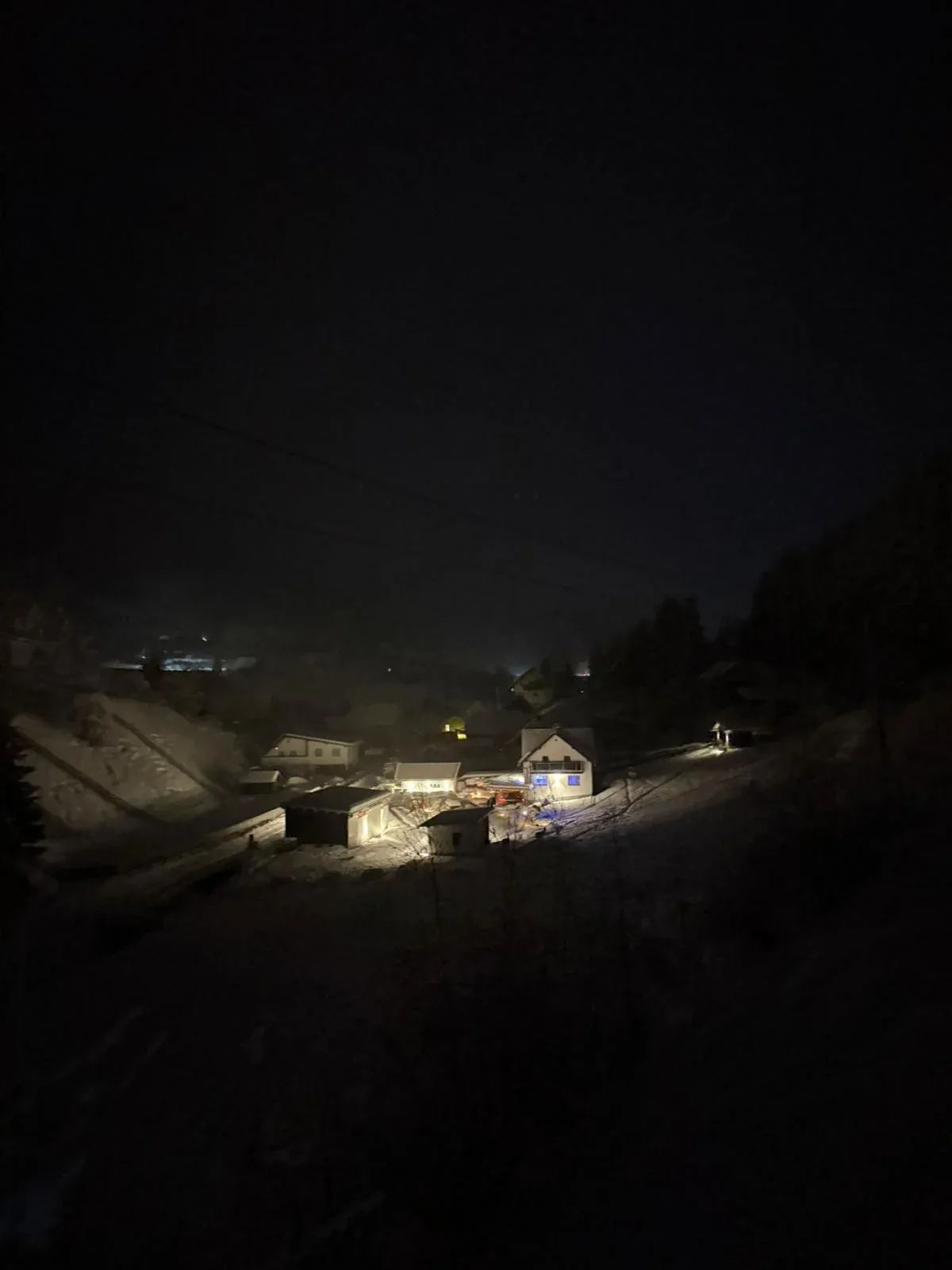
We recently received a photo from an installation partner in Austria. It shows a dark village, with one exception.
One single-family house was fully lit. While the public grid was down, the installed storage system automatically took over the power supply. The system detected the grid outage and supplied the house reliably, without any manual intervention.
What happens to a PV system during a power outage?
A conventional PV system without backup capability shuts down automatically in the event of a grid outage. The reason: grid protection. Without a grid reference, no energy may be fed in. The result: even though the sun is shining, the house stays dark.
Only a PV system with storage and a backup power function can keep running self-sufficiently in this situation.
A backup-capable storage system safely disconnects the building from the public grid and forms its own stable island grid.
How does a battery storage system with a standby power supply work?
A battery storage system with a standby power supply function detects a grid outage within seconds.
The system:
- safely disconnects the house from the public grid
- activates the standby power supply
- keeps defined circuits supplied
Depending on the system design, either a partial backup power solution or a complete supply for the whole house can be implemented.
In the case described, the entire house continued to be supplied.
Why backup power is a strong selling point for installers
Power outages are rare in Central Europe, but they do happen. And the need for security is growing.
Topics such as:
- blackout preparedness
- grid instability
- self-sufficiency
- security of supply
are becoming increasingly important to end customers.
For installers, this means:
- More arguments in sales consultations
- A higher closing rate for storage systems
- Differentiation from competitors
- The opportunity to sell higher-value systems
A PV storage system with backup power does not sell through datasheets – but through real-world examples.
And that is exactly what this project shows.
Self-sufficient during a power outage: from nice-to-have to deciding factor
For a long time, self-consumption was the main argument for battery storage systems.
Today, another factor comes into play:
Security of supply.
In customer conversations, the question is increasingly:
“What happens if the power goes out?”
A backup-capable storage system gives installers a clear answer to that question.
And this is exactly where differentiation arises.
Conclusion: security of supply as a competitive advantage
A dark village.
A lit-up house.
A working storage system.
This real-world example from Austria shows how a PV system with storage and a backup power function performs in an emergency.
Reliability does not reveal itself on the datasheet, but when it is put to the test.
For installers, this means:
Anyone selling storage today is not just selling self-consumption, but security.